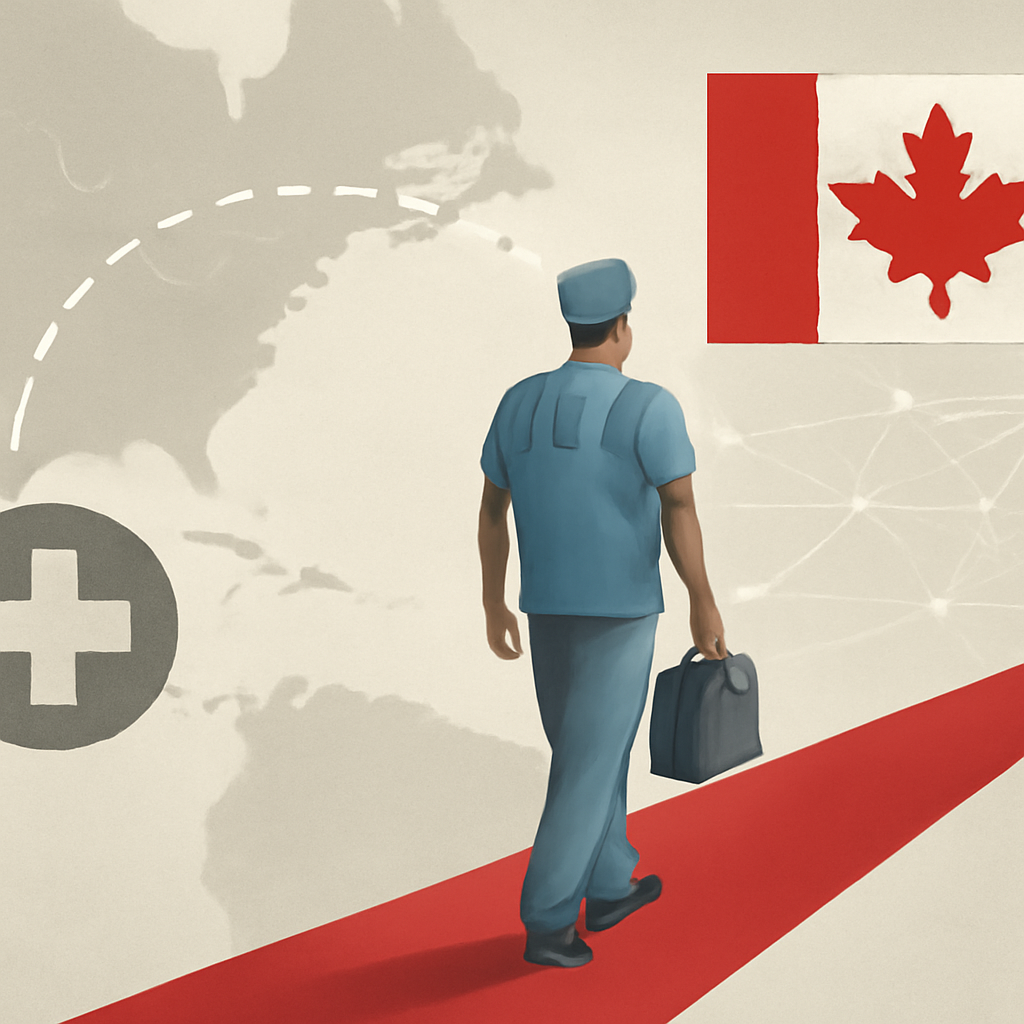
BC streamlines licensing for US healthcare workers
British Columbia has reported a significant increase in U.S.-trained healthcare professionals entering its workforce following regulatory changes introduced in 2025. The province states that more than 400 doctors, nurses, and allied health workers from the United States began working in B.C. over the past year.
The changes are part of a broader recruitment effort aimed at addressing labour shortages across healthcare systems. Updated licensing procedures have reduced processing times and removed several assessment steps previously required for U.S. applicants.
The developments affect internationally trained professionals, provincial regulators, and public healthcare services seeking to expand staffing capacity across urban and rural regions.
- Over 400 U.S.-trained healthcare workers joined B.C.’s workforce in one year
- More than 2,700 job applications were submitted following a 2025 campaign
- New licensing pathways eliminate additional exams for many physicians
- Nursing registration timelines reduced from months to days
- Applications from U.S. nurses increased by 127% after reforms

Regulatory changes accelerate credential recognition
In 2025, British Columbia introduced new procedures to simplify how U.S. medical qualifications are assessed. These updates were implemented by provincial regulatory bodies overseeing physicians and nurses.
Under the revised framework, certain U.S.-trained physicians can obtain full licensure without completing further examinations or supervised practice requirements. This applies to those certified by the American Board of Medical Specialties.
For nurses, the provincial regulator replaced a third-party assessment requirement with a direct review process. Credentials are verified using a U.S.-based national database, allowing faster validation of qualifications and employment records.
Changes affecting physicians
A new pathway introduced in mid-2025 enables eligible U.S.-trained physicians to receive full registration more quickly. Previously, even experienced practitioners were required to undergo additional evaluations before being licensed.
The updated system removes several administrative steps, shortening timelines that had often extended over several months. The change is intended to facilitate faster entry into clinical practice.
Changes affecting nurses
The nursing regulator introduced its streamlined process earlier in 2025. Applicants now submit documentation directly for review, with credential checks conducted through verified databases in the United States.
According to provincial data, processing times have been reduced from an average of up to four months to a period of days in many cases. The regulator reported a marked increase in applications following the change.
Between April 2025 and January 2026, more than 1,000 U.S.-trained nurses and nurse practitioners registered in British Columbia. This figure represents a substantial rise compared with the previous year.
Recruitment campaign and workforce needs
The licensing reforms were introduced alongside a targeted recruitment campaign launched in March 2025. The initiative focused on attracting healthcare professionals from the United States to address staffing shortages.
Provincial authorities report that the campaign generated over 2,750 job applications. Accepted candidates have taken positions in hospitals, clinics, and specialized care facilities.
As of early 2026, the workforce additions include physicians, nurses, nurse practitioners, and allied health professionals. Roles have been distributed across metropolitan centres such as Vancouver as well as northern and rural communities.
Healthcare services experiencing the greatest demand include emergency care, oncology, and rural health delivery. Recruitment efforts have emphasized these priority areas.
Immigration pathways supporting workforce entry
In addition to licensing reforms, immigration mechanisms influence how foreign-trained workers enter Canada’s labour market. U.S. citizens are permitted to travel to Canada for short stays but require authorization to work.
Many healthcare professionals entering British Columbia have used employer-specific work permits issued under the Canada–United States–Mexico Agreement (CUSMA). The agreement covers a range of regulated occupations, including physicians and registered nurses.
Other federal programs, such as the Temporary Foreign Worker Program and the International Mobility Program, also facilitate entry for individuals whose occupations are not listed under CUSMA.
Permanent residence pathways
Longer-term immigration status is typically obtained through federal economic immigration programs. These include the Federal Skilled Worker Program and the Canadian Experience Class, both administered through the Express Entry system.
Applicants are required to meet criteria such as language proficiency and educational credential assessment. Work experience in Canada can be used to qualify under certain pathways.
British Columbia also operates a Provincial Nominee Program that allows the province to select candidates based on labour market needs. Healthcare occupations have remained a focus category for invitations in recent selection rounds.
Other provinces maintain similar nomination systems, including the Manitoba Provincial Nominee Program, which also targets skilled workers in high-demand sectors.
Ongoing demand for healthcare professionals
Canada’s healthcare sector continues to face workforce shortages linked to population growth and system pressures. Provincial governments have introduced policy changes to increase recruitment from both domestic and international sources.
British Columbia’s updated licensing approach reflects a broader trend toward faster credential recognition for internationally trained professionals. These changes aim to reduce administrative barriers while maintaining regulatory standards.
The province continues to monitor application volumes and workforce integration as part of its healthcare staffing strategy.
Further updates on provincial immigration programs and healthcare workforce initiatives are available through ongoing Canadian immigration coverage.