TFWP Work Permit Arrivals Hit Two-Year Low: What’s Behind the Drop?
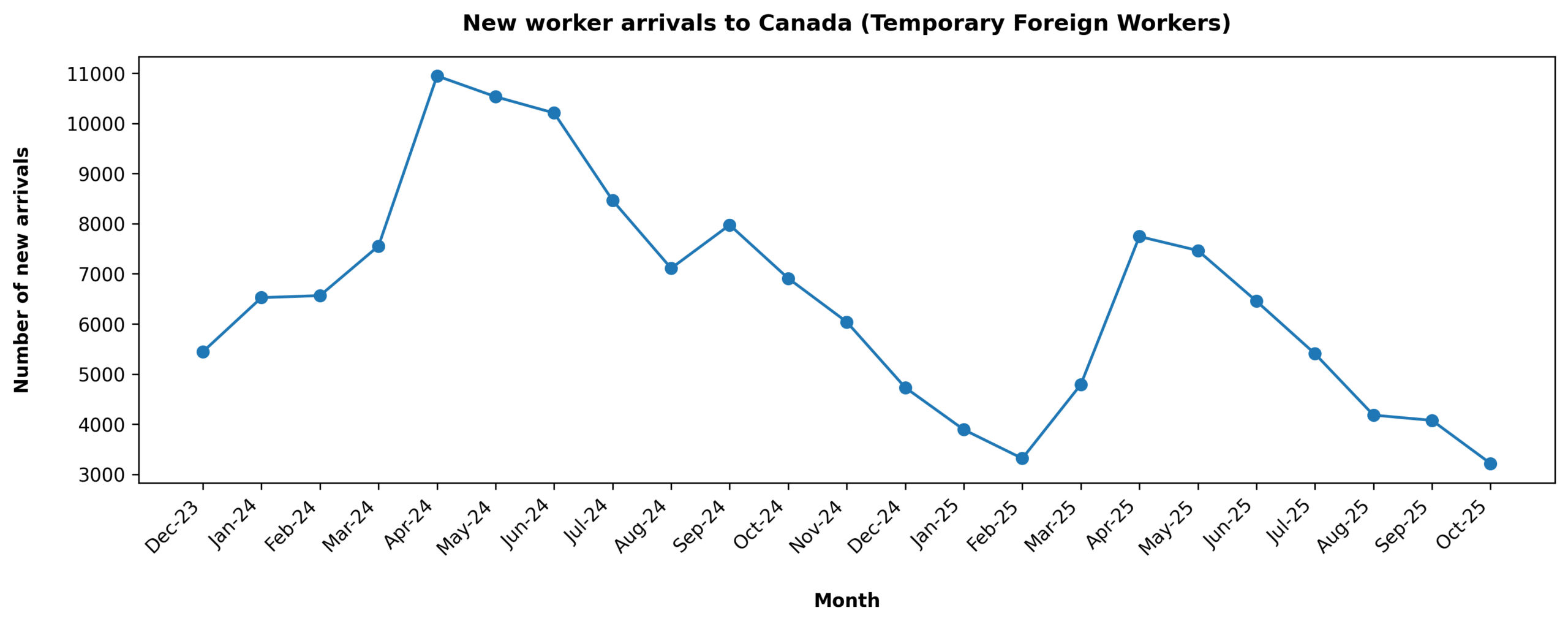
- Canada recorded just 3,215 new arrivals under the Temporary Foreign Worker Program (TFWP) in October 2025 — the lowest monthly figure since 2023.
- Federal policy changes have significantly tightened access to the program, especially for low-wage positions.
- Wage thresholds have increased, regional restrictions expanded, and caps on employer usage have been introduced.
- The 2026 immigration plan aims for 60,000 TFWP arrivals — down 27% from the previous year.
- Declines are also visible across other programs like the International Mobility Program (IMP) and international student streams.
- Ongoing debate continues around the TFWP’s role in Canada’s labour market and economy.
Over the past few years, Canada’s Temporary Foreign Worker Program (TFWP) has been a vital pathway for employers to fill urgent labour shortages. But recently, the program has hit a major slowdown. According to the latest data released by Immigration, Refugees and Citizenship Canada (IRCC), the number of new work permit holders arriving under the TFWP in October 2025 has dipped to just 3,215 — the lowest monthly total since the dataset began in December 2023.
This drop is no accident. It’s largely the result of deliberate policy changes introduced by the federal government aimed at reshaping how temporary labour programs function in Canada. So let’s take a closer look at what’s driving this change, and what it means for employers, workers, and the broader immigration landscape.
Understanding the Recent Decline in TFWP Arrivals
The TFWP has seen its fair share of ups and downs, but 2025 has been particularly telling. After a seasonal spike earlier in the year — largely attributed to summer hiring in sectors like agriculture and tourism — the numbers started to decline sharply. October’s figures mark a steep low point.
Policy shifts are at the heart of this change. Since mid-2024, the federal government has introduced a series of reforms aimed at tightening the program and ensuring it aligns with Canada’s evolving labour market needs. These changes include:
- Freezing low-wage LMIA processing in regions where unemployment sits at 6% or higher.
- Raising wage thresholds for applications under the high-wage stream, making it more costly for employers to bring in foreign workers.
- Reducing employer workforce caps, limiting the share of a company’s workforce that can be composed of temporary foreign workers.
- Restricting access to spousal open work permits (SOWPs), reserving them for spouses of workers in highly skilled or in-demand roles.
These measures reflect a growing concern among policymakers that the TFWP was being used in ways that may suppress wages, reduce job opportunities for Canadian youth, and strain housing and social services — especially in tight economic times.
Political Pressure and Calls for Reform
The TFWP has become a bit of a political lightning rod. In September 2025, the Conservative Party of Canada even called for its complete elimination, arguing that the program was contributing to youth unemployment and undermining Canadian labour market stability.
While that may be a strong stance, it highlights the pressure on the federal government to balance the needs of employers with the broader economic wellbeing of Canadian residents. In response, the latest Immigration Levels Plan set a target of only 60,000 TFWP arrivals for 2026 — that’s a 27% cut from the previous year’s target of 82,000.
It’s Not Just the TFWP: Other Programs Also Affected
The downward trend isn’t isolated to the TFWP. Canada’s other major work permit program — the International Mobility Program (IMP) — has also seen a significant decline in arrivals. And for international students, October 2025 marked a two-year low in new enrolments.
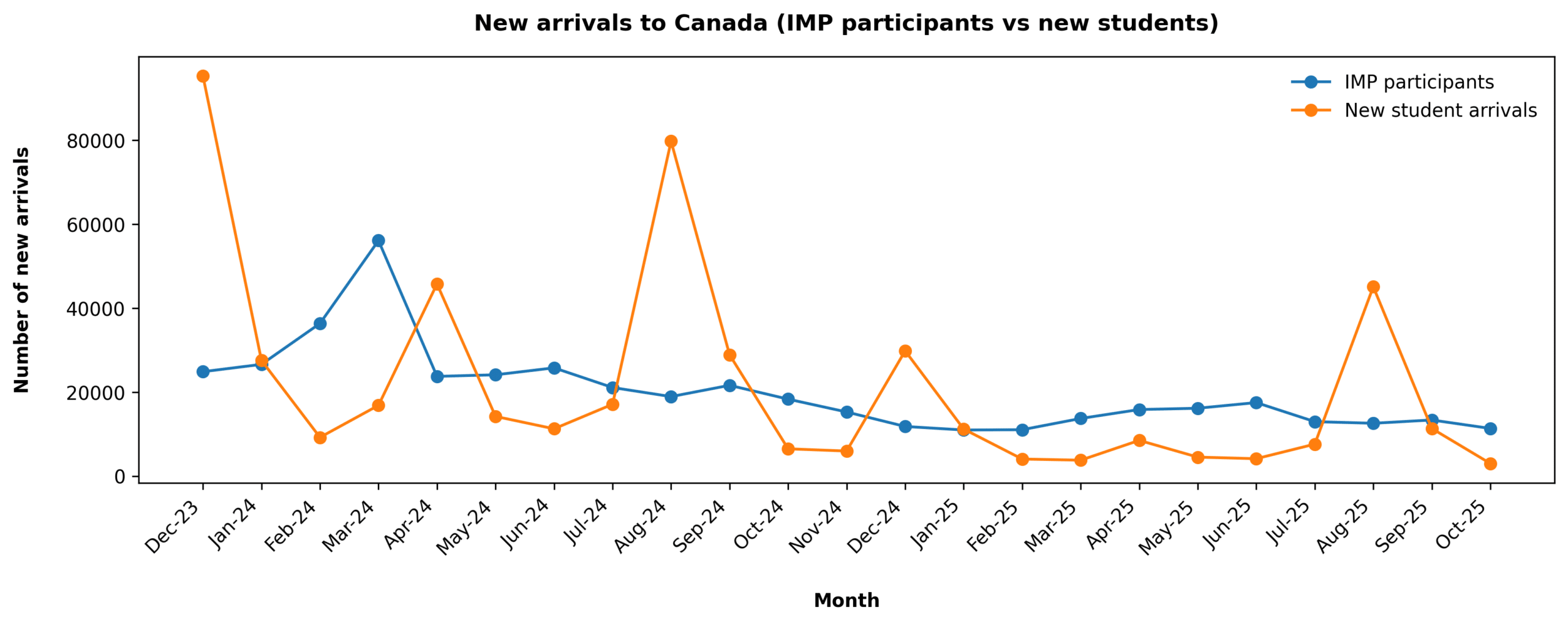
These declines reflect a broader recalibration of Canada’s immigration and temporary resident programs. With increased scrutiny on housing availability, economic integration, and service capacity, the government appears to be taking a more measured approach to managing who comes to Canada — and under what conditions.
What Does This Mean for Employers and Workers?
If you’re an employer who relies on the TFWP to fill gaps in your workforce, these changes might be particularly challenging. Higher wage requirements and more restrictions on where and how you can hire will likely require adjustments in recruitment strategy and budgeting.
For prospective foreign workers, it means fewer opportunities under this stream — especially for low-wage or entry-level roles. However, there are still viable options available under other pathways, such as the International Mobility Program or provincial nominee programs like the Manitoba PNP, which offer alternate routes to work and eventually settle in Canada.
Looking Ahead: A More Selective Program?
The future of the TFWP will likely involve a continued focus on ensuring that temporary foreign workers are brought in only when there’s a clear need that can’t be met by the local workforce. In this sense, the program may become more selective, favouring high-demand and high-skilled occupations — particularly in regions experiencing acute labour shortages.
While this approach may protect Canadian workers and reduce strain on services, it’s also important to ensure that employers in critical sectors — like agriculture, healthcare, and construction — can still access the talent they need to thrive.
Final Thoughts
There’s no denying that Canada’s immigration landscape is shifting. The dip in TFWP arrivals is just one sign of broader changes in how the country is managing its workforce and immigration goals. Whether you’re an employer, a foreign worker, or just someone keeping an eye on Canada’s changing policies, staying informed is key.
Need help navigating your work permit or immigration options? We’re here to help. Reach out today to explore your best pathways to working and settling in Canada.