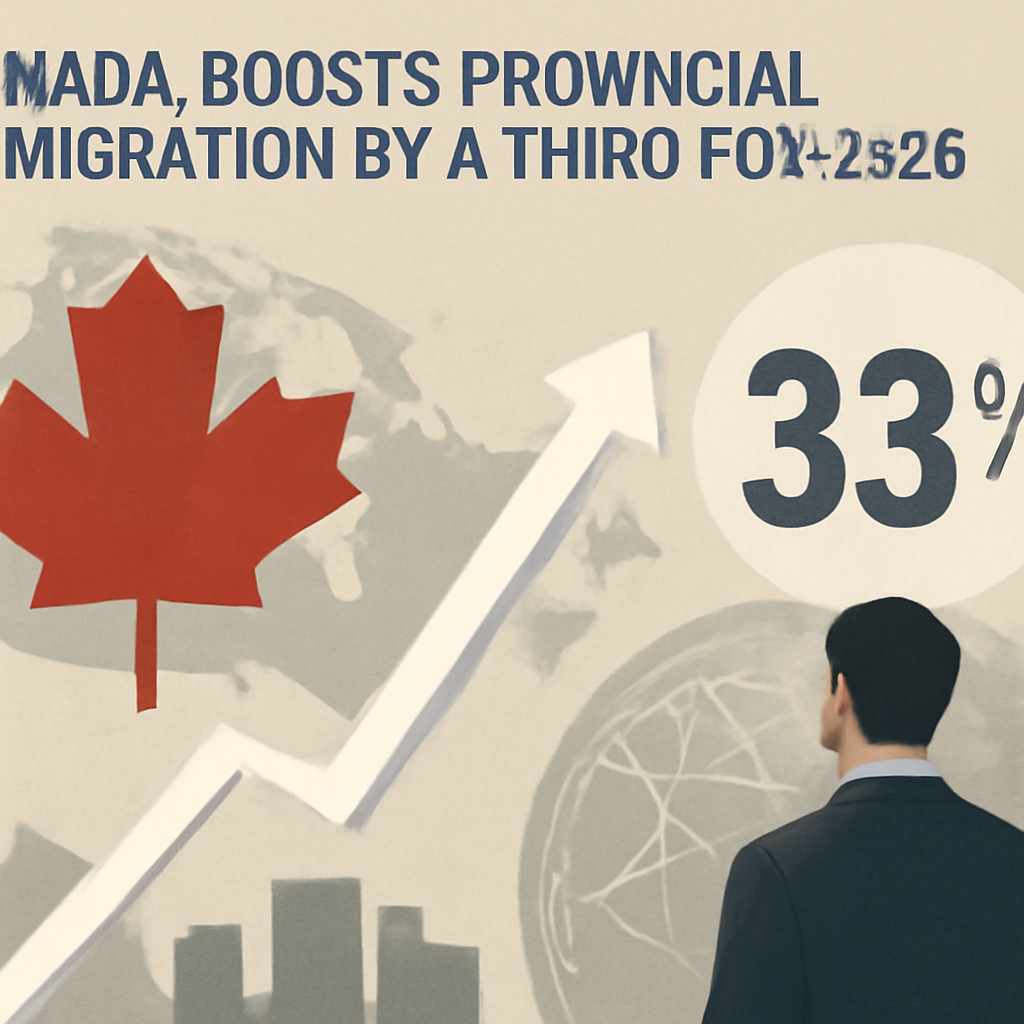
Canada Increases Provincial Nominee Allocations in 2026
Canada has raised the number of provincial nominations available for permanent residence in 2026, with allocations increasing by roughly 31% compared to initial figures released at the start of 2025.
The adjustment applies to multiple provinces and territories participating in the Provincial Nominee Program (PNP), which allows regional governments to select candidates for immigration based on local labour and demographic needs.
The change expands the number of foreign nationals who can be nominated for permanent residence through provincial streams, affecting applicants and provincial immigration systems across the country.
- Provincial nomination allocations increased by approximately 31% for 2026
- Ontario, Alberta, Manitoba, and British Columbia all received higher quotas
- Smaller jurisdictions such as Yukon and Northwest Territories also saw proportional gains
- Some Atlantic provinces have not yet published 2026 allocation totals
- Nomination allocations determine how many candidates provinces can put forward for PR

Provincial Allocation Increases Across Canada
Updated figures show that several provinces and territories received significant increases in their nomination quotas for 2026. The changes reflect a consistent proportional rise across participating jurisdictions.
Ontario’s allocation rose to 14,119 nominations, compared to 10,750 at the beginning of 2025. Alberta received 6,403 spots, up from 4,875, while Manitoba’s allocation reached 6,239, compared to 4,750 previously.
British Columbia was assigned 5,254 nominations, up from 4,000, and Saskatchewan’s total increased to 4,761 from 3,625. Smaller jurisdictions also followed the same trend, with Yukon increasing to 282 and the Northwest Territories to 197.
Each of these changes represents an increase of just over 31%, indicating a uniform adjustment across multiple regions rather than targeted redistribution.
Atlantic Provinces Yet to Confirm Totals
As of late March 2026, several Atlantic provinces had not publicly released their updated nomination allocations for the year. These include New Brunswick, Nova Scotia, Newfoundland and Labrador, and Prince Edward Island.
Despite the absence of official figures, some of these provinces have already conducted nomination draws in 2026. Based on the pattern observed in other jurisdictions, a similar proportional increase may be reflected once figures are published, although no formal confirmation has been issued.
How the Provincial Nominee Program Works
The Provincial Nominee Program allows provinces and territories to nominate foreign nationals for Canadian permanent residence. Each jurisdiction operates its own streams aligned with regional economic priorities.
A nomination is issued when a province selects a candidate and provides a certificate confirming that selection. The nominee must then submit a permanent residence application to the federal government for final approval.
Allocation levels determine how many nominations a province can issue in a given calendar year. These figures are set by the federal government and distributed among provinces and territories.
In Manitoba, for example, candidates are assessed through streams under the Manitoba Provincial Nominee Program. Additional details on selection factors can be found through tools such as the Manitoba PNP points calculator, which reflects how points-based criteria are structured.
Distinction Between Nominations and Permanent Resident Admissions
Nomination allocations are separate from the number of permanent residents admitted to Canada each year under the federal immigration levels plan.
A nomination represents an earlier stage in the immigration process. After receiving a provincial nomination, applicants must undergo federal processing, which includes background checks and admissibility assessments.
Processing timelines for permanent residence applications can range from several months to over a year. As a result, there is often a delay between when a nomination is issued and when a person officially becomes a permanent resident.
This timing difference means that increases in nomination allocations do not immediately translate into higher permanent resident admissions within the same year.
Context Behind the 2026 Increase
The 2026 allocation changes follow adjustments made throughout 2025, when several provinces received additional nomination spaces beyond their initial allocations.
The figures used for comparison reflect the baseline allocations published at the start of 2025, rather than final totals later revised during that year. This context highlights the scale of the 2026 increase relative to initial annual planning levels.
The consistent percentage increase across jurisdictions suggests a coordinated federal approach to expanding provincial immigration capacity.
Public Relevance of Allocation Changes
Provincial nominee allocations play a central role in Canada’s immigration system, particularly for regions seeking to address labour shortages and population distribution.
By increasing these quotas, provinces gain additional capacity to select candidates aligned with local workforce needs. The changes also affect processing volumes within provincial immigration departments and federal application streams.
Ongoing updates from provinces that have yet to publish their figures are expected to provide a more complete national picture of nomination capacity for 2026.
Further developments related to provincial immigration allocations and nomination activity continue to be reported as new information becomes available.