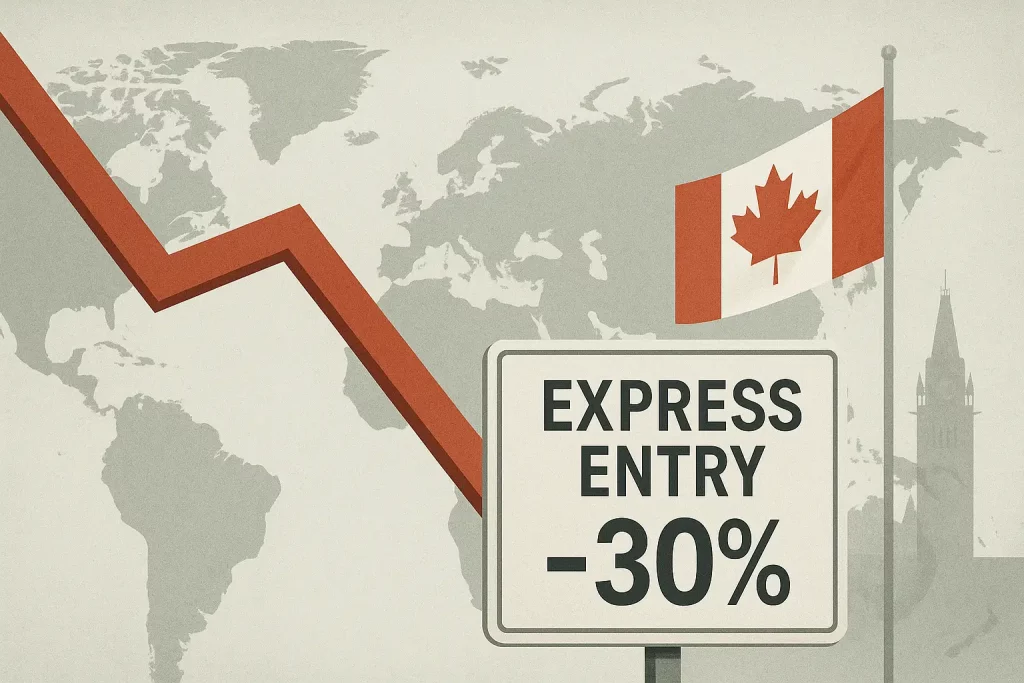
Fewer Top-Scoring Express Entry Profiles Recorded in February
New data from Immigration, Refugees and Citizenship Canada (IRCC) indicate a continued decline in the number of top-ranked Express Entry candidates for the second consecutive month. The reduction comes as the total number of active profiles in the system continues to rise.
Between January 4 and February 2, 2026, 6,238 profiles with Comprehensive Ranking System (CRS) scores of 501 or higher exited the pool. The largest decline occurred in the 501–600 range, reflecting a significant shift in the composition of the candidate pool.
- Profiles scoring 501–600 fell by 6,102, a 29% decrease.
- Profiles scoring 601–1200 dropped by 136, down 24%.
- The total number of active profiles increased by 2,366, reaching 238,920.
- Growth occurred mainly among candidates scoring below 500.
- Data suggest a less top-heavy pool entering 2026 invitation rounds.
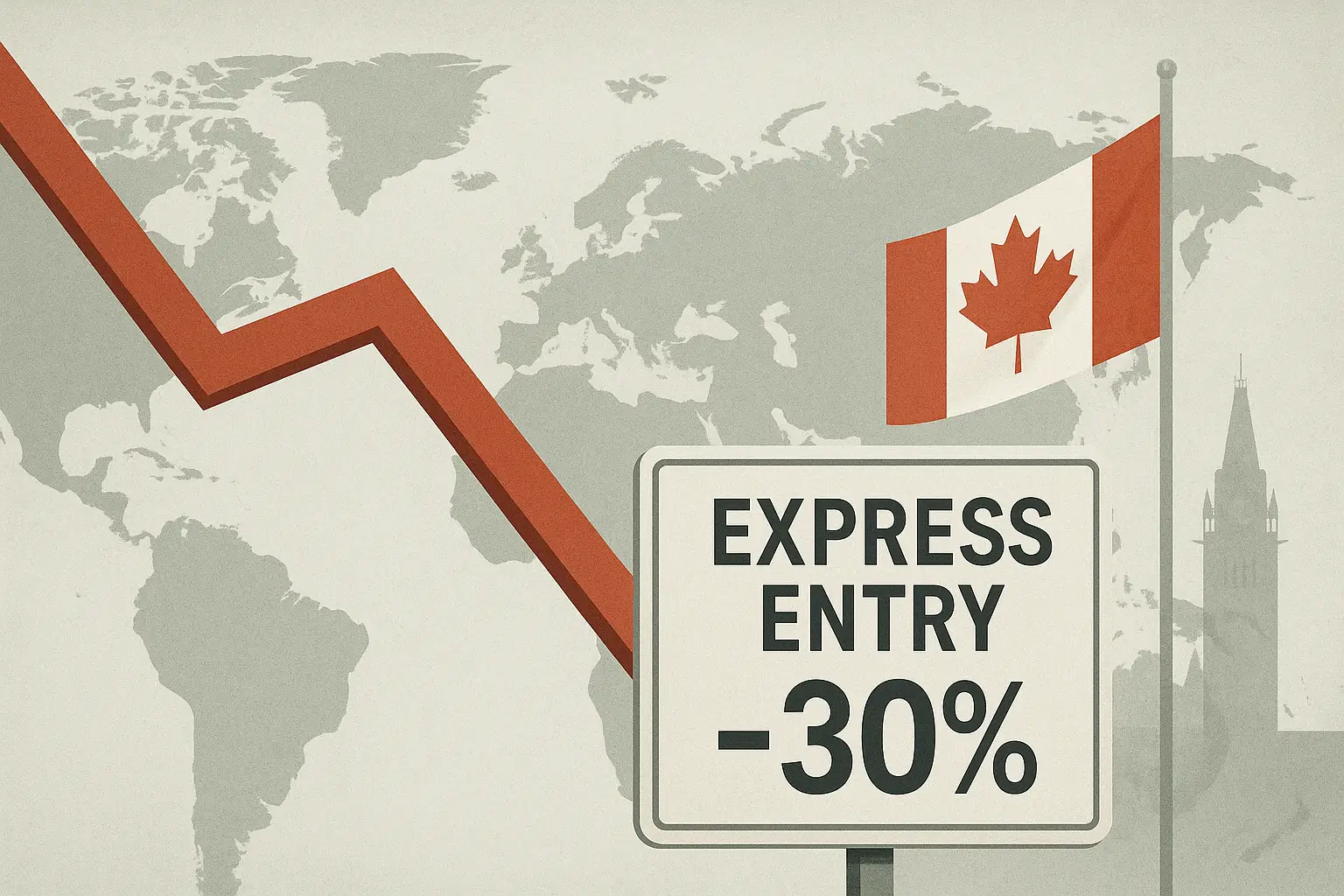
Express Entry Pool Composition
As of February 2, the Express Entry pool included 238,920 profiles, compared to 236,554 on January 4. While higher score ranges experienced declines, every CRS band below 500 recorded an increase.
The 471–480 range grew by 1,182 profiles, while the 461–470 group expanded by 910. These increases contributed to overall pool growth, despite the significant drop among top scorers.
Distribution by CRS Score Range
The largest share of candidates remained in the mid-range scores between 351 and 400, with more than 53,000 profiles in that category. Scores between 401 and 500 also saw steady growth, reflecting continued interest from skilled workers seeking permanent residence through the federal selection system.
The top two score ranges recorded the steepest declines. Profiles in the 501–600 band decreased from 21,013 to 14,911, while those in the 601–1200 range fell from 559 to 423.
Pool Growth and Candidate Ranking
Although the number of high-ranking candidates dropped, the total pool size increased by roughly 1%. This suggests that more new candidates with moderate CRS scores entered the system than the number of high-scoring profiles that exited.
Express Entry invitations are issued to the highest-ranked candidates first. As a result, a smaller share of profiles with scores above 500 indicates a broader distribution across lower CRS ranges.
Similar dynamics can influence provincial programs such as the Manitoba Provincial Nominee Program (MPNP), which often draws from the federal Express Entry pool to identify skilled workers meeting local labour needs.
Percentile Ranking of Current Candidates
IRCC also released percentile rankings showing how candidates are distributed across the CRS spectrum. Candidates scoring between 501 and 600 represent approximately the top 6% of the pool, while those above 600 account for less than one percent.
The largest single group, representing more than 22% of all profiles, falls within the 351–400 range. This reflects a continued concentration of candidates in mid-level scores, where incremental improvements in language, work experience, or education often determine movement up the ranking.
Broader Context
The Express Entry system manages applications for the Federal Skilled Worker Program, Federal Skilled Trades Program, and Canadian Experience Class. Candidates receive CRS points based on human capital factors such as age, education, language ability, and work experience.
Since 2023, IRCC has also conducted category-based selection draws targeting specific occupations and language skills. These specialized rounds are intended to address federal and provincial labour market needs.
Recent Trends and Public Relevance
The decline in top-end scores follows several months of category-based draws that issued invitations at lower CRS thresholds for occupations including health care, STEM, and trades. This approach has diversified the range of invited candidates and contributed to changing score distributions within the pool.
Overall, the February data reinforce that while the number of candidates with extremely high CRS scores has decreased, overall participation in the federal economic immigration system continues to expand.
Ongoing Monitoring
IRCC typically updates the Express Entry pool distribution on a biweekly or monthly basis. Tracking these changes provides insight into evolving competitiveness within the system and how new invitation rounds may reflect current score patterns.
Additional provincial programs, including those aligned with Express Entry, continue to select candidates from the pool according to regional priorities. Manitoba and other provinces maintain their own nomination pathways in coordination with the federal system.
Further updates on Express Entry trends and other provincial nominee program draws are expected as Immigration, Refugees and Citizenship Canada releases new data throughout 2026.
Readers can explore related coverage on federal and provincial immigration pathways for ongoing developments across Canada’s skilled worker programs.