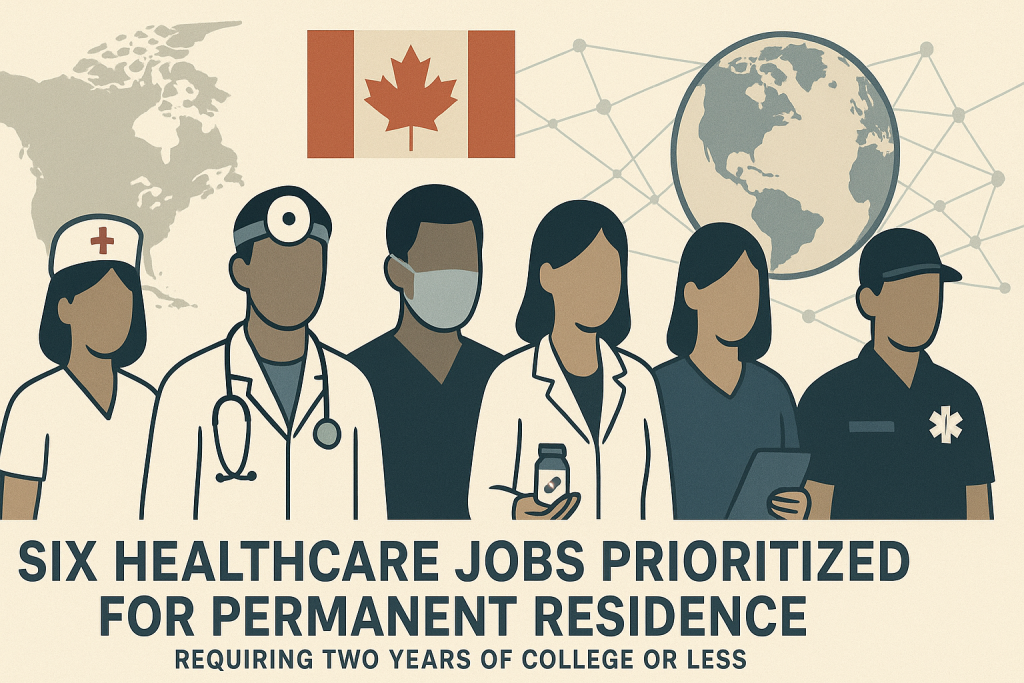
Six Healthcare Jobs Prioritized for Canadian Permanent Residence
Canada continues to prioritize healthcare professionals for permanent residence as part of its immigration strategy to address labour shortages in critical medical and support roles. Several healthcare occupations that require two years or less of college training have been identified among those receiving priority consideration through federal immigration pathways.
Healthcare graduates and workers, including international students and foreign-trained professionals, remain a key focus for both federal and provincial nominee programs such as the Manitoba Provincial Nominee Program (MPNP). The approach aligns with the federal government’s effort to strengthen the healthcare workforce across Canada’s provinces and territories.
- Six healthcare occupations requiring two years or less of college education are being prioritized.
- Most positions fall under regulated professions requiring provincial licensing.
- Healthcare professionals receive targeted invitations under Express Entry.
- Category-based draws for healthcare and social services show lower CRS thresholds than general draws.
- Recent draws have recorded Comprehensive Ranking System (CRS) cut-offs between 462 and 476.
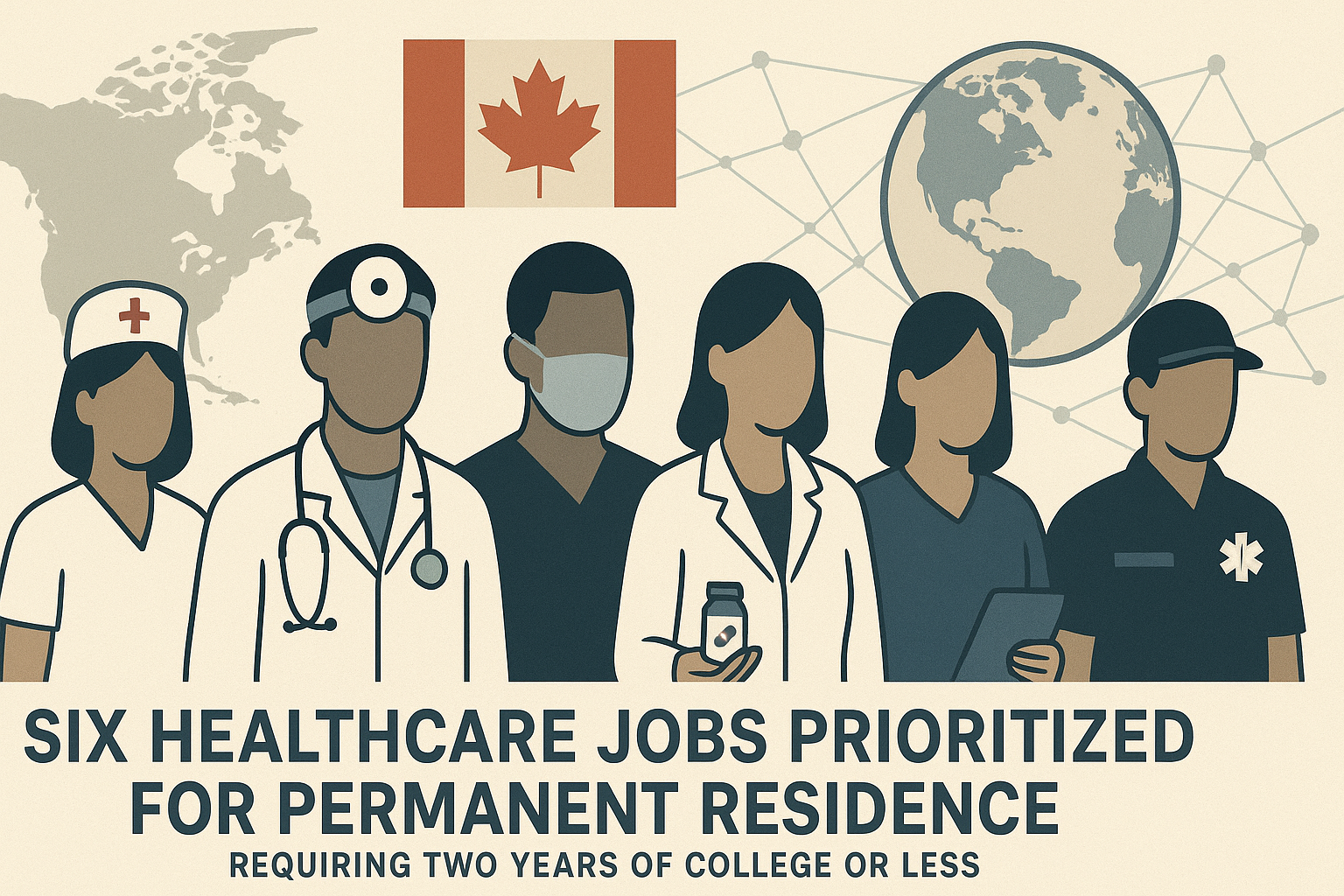
Priority Healthcare Occupations
While some healthcare professions in Canada require extensive education, others can be accessed after short-term college programs. Six occupations currently highlighted for permanent residence consideration typically require two years or less of training:
| Occupation | Approximate Program Length |
|---|---|
| Medical laboratory assistants and related technical occupations (NOC 33101) | 1 year |
| Nurse aides, orderlies and patient service associates (NOC 33102) | 6–12 months |
| Other technical occupations in therapy and assessment (NOC 32109) | 2 years |
| Paramedical occupations (NOC 32102) | 1–2 years |
| Pharmacy technical assistants and pharmacy assistants (NOC 33103) | 6–12 months |
| Pharmacy technicians (NOC 32124) | 2 years |
Licensing and Regulation
Most of these occupations are regulated at the provincial level. Individuals pursuing these careers must obtain certification or registration from the relevant provincial authority before beginning professional practice. Licensing procedures generally involve supervised clinical training or work placements and completion of standardized competency examinations.
Many academic programs integrate practical training that contributes toward licensing requirements. However, each province maintains distinct rules and timelines for credential recognition and examination schedules.
Priority Pathways for Healthcare Immigration
Healthcare professionals are among the groups most frequently invited to apply for Canadian permanent residence through the federal Express Entry system. The system manages applications for the Canadian Experience Class, Federal Skilled Worker Program, and Federal Skilled Trades Program.
Applicants must first complete an approved language test, meet program-specific criteria, and create an online profile in the Express Entry pool. Invitations to apply for permanent residence are issued to top-ranking candidates based on the Comprehensive Ranking System (CRS), which evaluates skills, education, work experience, and other factors.
Category-Based Draws
Since 2025, the federal government has held category-based draws under Express Entry to target specific sectors, including healthcare and social services. To be eligible for a healthcare-category draw, candidates must demonstrate at least six months of continuous full-time—or equivalent part-time—work experience in a qualifying occupation within the past three years.
These category-based draws allow healthcare candidates to receive invitations at lower CRS thresholds compared with general or Canadian Experience Class rounds. Between October 2025 and January 2026, CRS cut-offs for healthcare and social services draws ranged from 462 to 476, while general draws during the same period recorded cut-offs between 509 and 534.
Provincial Involvement in Healthcare Immigration
In addition to federal pathways, several provinces operate immigration streams that prioritize healthcare professionals. The Manitoba Provincial Nominee Program (MPNP), for example, continues to select candidates with in-demand healthcare experience to address local workforce needs. Similar initiatives are active in other provinces, aligning with national targets to recruit and retain healthcare talent across Canada.
Impact on Labour Market and Immigration Policy
Data from Statistics Canada shows that healthcare graduates in Canada are more likely than their counterparts in business or STEM fields to secure employment related to their studies and subsequently transition to permanent residence. This trend has reinforced the federal government’s focus on facilitating pathways for healthcare workers through both permanent and temporary immigration streams.
Ongoing adjustments to immigration selection criteria underscore the importance of healthcare roles in meeting national labour demands. The emphasis on accessible educational requirements—some as brief as six months of post-secondary study—aims to attract a broader pool of qualified applicants ready to join the Canadian healthcare system.
Outlook
Healthcare occupations remain central to Canada’s immigration strategy as the country continues to address shortages across hospitals, clinics, and long-term care facilities. Federal and provincial governments are expected to maintain targeted recruitment and streamlined pathways for healthcare professionals in the coming years.
Further coverage of healthcare immigration trends and policy updates is available in the immigration news and analysis section of this publication.