Citizenship proof delays rise amid surge in U.S. applicants
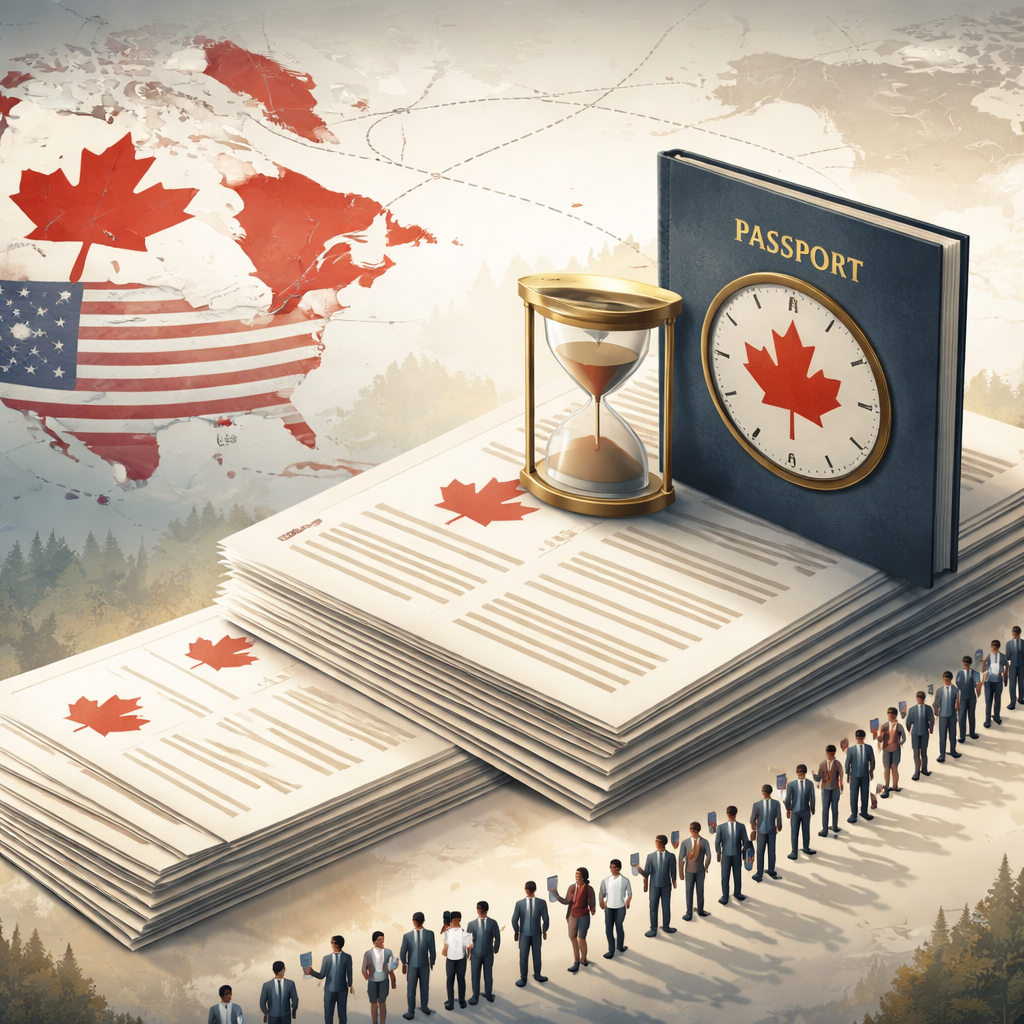
Processing times for Canadian proof of citizenship certificates have significantly increased following a surge in applications from the United States. Federal estimates now indicate wait times have doubled compared to the previous year.
The increase follows a legislative change introduced in December 2025 that expanded eligibility for citizenship by descent. Millions of individuals with Canadian ancestry are now seeking formal recognition of their status.
The trend is affecting applicants primarily in the United States, where historical migration patterns have created a large pool of newly eligible individuals.
- Processing times for citizenship certificates have risen to approximately 10 months
- A December 2025 law expanded citizenship eligibility across generations
- Millions of U.S. residents are estimated to qualify under the revised rules
- Applications from U.S. citizens increased sharply in early 2026
- Processing estimates are based on current and projected application volumes
Expansion of citizenship by descent rules
In December 2025, Canada removed previous limits on how many generations citizenship could be passed down from a Canadian ancestor. This change allows individuals born before December 15, 2025 to claim citizenship if they can demonstrate an unbroken lineage to a Canadian-born relative.
The updated framework applies to descendants of Canadian citizens regardless of how many generations separate them. Eligible individuals are recognized as citizens but must apply for official documentation to confirm their status.
This policy shift triggered renewed interest among individuals with historical family ties to Canada, particularly in the United States.
Historical migration and eligibility
The scale of eligibility is linked to migration patterns dating back to the 19th and early 20th centuries. Between 1840 and 1930, approximately 900,000 Canadians relocated to industrial regions in the United States.
Large numbers settled in New England and parts of the Midwest, forming communities with sustained cultural and familial ties to Canada. These populations now represent a significant share of those eligible under the revised citizenship rules.
Estimates indicate that a notable proportion of residents in northeastern U.S. states have Canadian ancestry, contributing to the current surge in applications.
Application volumes increase in 2026
Recent federal data shows a rise in citizenship by descent applications submitted by U.S. citizens in early 2026. January figures were described as above historical averages.
Many applicants are seeking official documentation of citizenship rather than planning immediate relocation. Canadian authorities formally recognize dual citizenship, and holding Canadian status does not affect U.S. nationality.
Citizenship provides legal rights including the ability to live and work in Canada, as well as access to a Canadian passport.
Processing system and rising wait times
Immigration, Refugees and Citizenship Canada calculates processing times using a forward-looking model. Estimates take into account current inventory, staffing levels, and anticipated new applications.
This method means processing timelines can change quickly as application volumes increase. Monthly updates reflect shifts in demand and operational capacity.
In mid-2024, proof of citizenship processing times were approximately three months. By mid-2025, they had increased to five months, and current estimates are now around ten months.
Comparisons with other immigration programs
Other Canadian immigration pathways have experienced similar fluctuations. Processing times for certain federal and regional programs have increased substantially when application volumes surged.
For example, forward-looking estimates in economic pathways have previously shifted from under one year to multiple years within a short period. These changes highlight how demand can affect service timelines across the system.
Unlike capped programs, there is no formal limit on the number of proof of citizenship applications that can be submitted. This allows application volumes to expand without a defined ceiling.
Broader immigration context
The rise in citizenship-related applications is occurring alongside continued interest in other Canadian immigration pathways. Programs such as the Manitoba Provincial Nominee Program remain active entry routes for skilled workers seeking permanent residence.
Eligibility for provincial programs is assessed differently from citizenship by descent and often depends on labour market criteria. Further details can be found through resources such as the Manitoba PNP points calculator.
These pathways operate independently but contribute to overall demand on Canada’s immigration processing system.
Public relevance and ongoing trends
The increase in applications reflects a broader awareness of eligibility following the 2025 legislative change. Individuals with Canadian ancestry are seeking to formalize their status under the updated framework.
Processing delays are emerging as a key administrative outcome of this surge. Federal authorities continue to adjust timelines based on incoming application volumes.
The situation remains dynamic, with updated processing estimates published regularly as new data becomes available.
Further developments in citizenship processing and Canadian immigration programs continue to be monitored across the sector.