IRCC backlog falls to lowest level since July 2025
Canada’s immigration application backlog declined at the end of February 2026, according to newly released data from Immigration, Refugees and Citizenship Canada (IRCC).
The department reported 941,400 applications exceeding standard processing times, marking a monthly decrease of 48,900 cases.
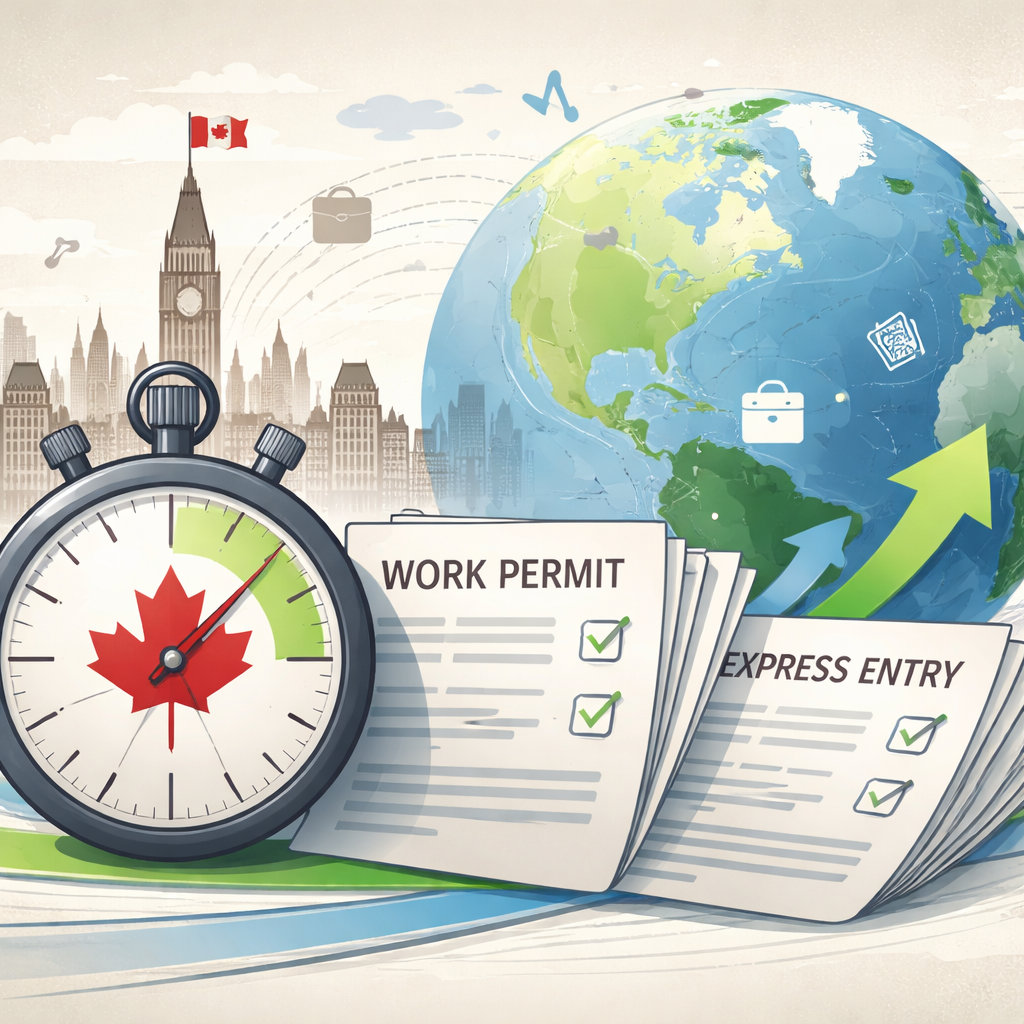
The reduction reflects improvements across several major application categories, including work permits, visitor visas, and Express Entry.
- Total backlog decreased to 941,400 as of February 28, 2026
- Work permit backlog fell by 11% over one month
- Visitor visa backlog declined by 6%
- Express Entry and study permit backlogs each dropped by 4%
- Total applications in inventory reached 2,092,700
- More than 1.15 million applications processed within service standards
Overall inventory and processing trends
IRCC reported a total inventory of 2,092,700 applications at the end of February, representing a slight increase compared to the previous month.
Of these, approximately 1,151,300 applications were processed within established service standards, while the remainder contributed to the backlog.
The current backlog level represents the lowest recorded since July 2025, following several months of fluctuation throughout the second half of that year and early 2026.
Permanent residence applications
Permanent residence applications accounted for over one million cases in IRCC’s inventory by the end of February, totaling 1,007,400.
Of these, 470,600 files were processed within standard timelines, while 536,800 exceeded expected timeframes and were classified as backlog.
The permanent residence category includes Express Entry programs, enhanced Provincial Nominee Program (PNP) streams, and family sponsorship applications outside Quebec.
Express Entry and PNP trends
The proportion of Express Entry applications in backlog declined to 11%, down from 15% in January.
This represents the lowest share recorded since IRCC began publishing backlog data for this category.
Backlogs in enhanced PNP streams also decreased, reaching 40% compared to 42% in the previous month.
Provincial programs, including those operated under frameworks such as the Manitoba Provincial Nominee Program, remain part of this category, with additional information available through tools like the Manitoba PNP points calculator.
Family sponsorship applications remained stable, with 22% exceeding service standards, unchanged from January levels.
Between January 1 and February 28, IRCC finalized 70,400 permanent residence applications and admitted 53,400 new permanent residents.
Temporary residence applications
Temporary residence applications totaled 824,500 at the end of February, reflecting a decline of 20,900 compared to the previous month.
IRCC processed 480,400 of these within service standards, while 344,100 remained in backlog.
This category includes work permits, study permits, and visitor visas.
Work and study permits
The backlog rate for work permit applications declined significantly, reaching 27% compared to 38% at the end of January.
Study permit applications also saw a reduction, with backlog levels decreasing from 50% to 46% over the same period.
Despite this improvement, study permit processing continued to exceed projected backlog levels for February.
IRCC finalized 302,800 work permit applications and 74,300 study permit applications during the first two months of 2026.
Visitor visa applications
Visitor visa applications experienced a drop in backlog from 54% in January to 48% by the end of February.
While the trend indicates progress, the backlog remained above the department’s projected level for the month.
Citizenship applications
IRCC reported 260,800 citizenship grant applications in its inventory at the end of February, an increase of 9,700 from the previous month.
Of these, 200,300 were processed within service standards, while 60,500 were classified as backlog.
The share of backlog cases in this category declined slightly to 23%, compared to 24% in January.
Between April 1, 2025, and February 28, 2026, a total of 509,100 individuals were granted Canadian citizenship.
Service standards and backlog definition
IRCC establishes service standards to indicate how long most applications are expected to take under normal conditions.
These benchmarks are designed to ensure that approximately 80% of applications are finalized within a specified timeframe.
For example, Express Entry applications typically have a six-month processing standard, while family sponsorship cases are generally aligned with a 12-month timeline.
Applications that remain undecided beyond these timeframes are included in the backlog figures.
A portion of applications can exceed standard processing times due to complexity, additional documentation requirements, or extended background and security checks.
Context and recent trends
The reduction in backlog levels follows elevated totals recorded during late 2025, when the number of pending cases surpassed one million.
Monthly data shows gradual declines beginning in early 2026, with February marking the second consecutive month of notable decreases.
Shifts across multiple categories, particularly work permits and Express Entry, have contributed to the overall improvement in processing timelines.
Ongoing monitoring of application volumes
IRCC continues to manage a large volume of incoming and existing applications across immigration and citizenship programs.
Fluctuations in inventory levels reflect both processing capacity and the number of new applications submitted.
Further updates on application volumes and processing performance are expected as part of regular departmental reporting.